34 production systems. Private infrastructure, distributed AI, reasoning engines, creative pipelines, and autonomous operations — designed, built, and shipped.

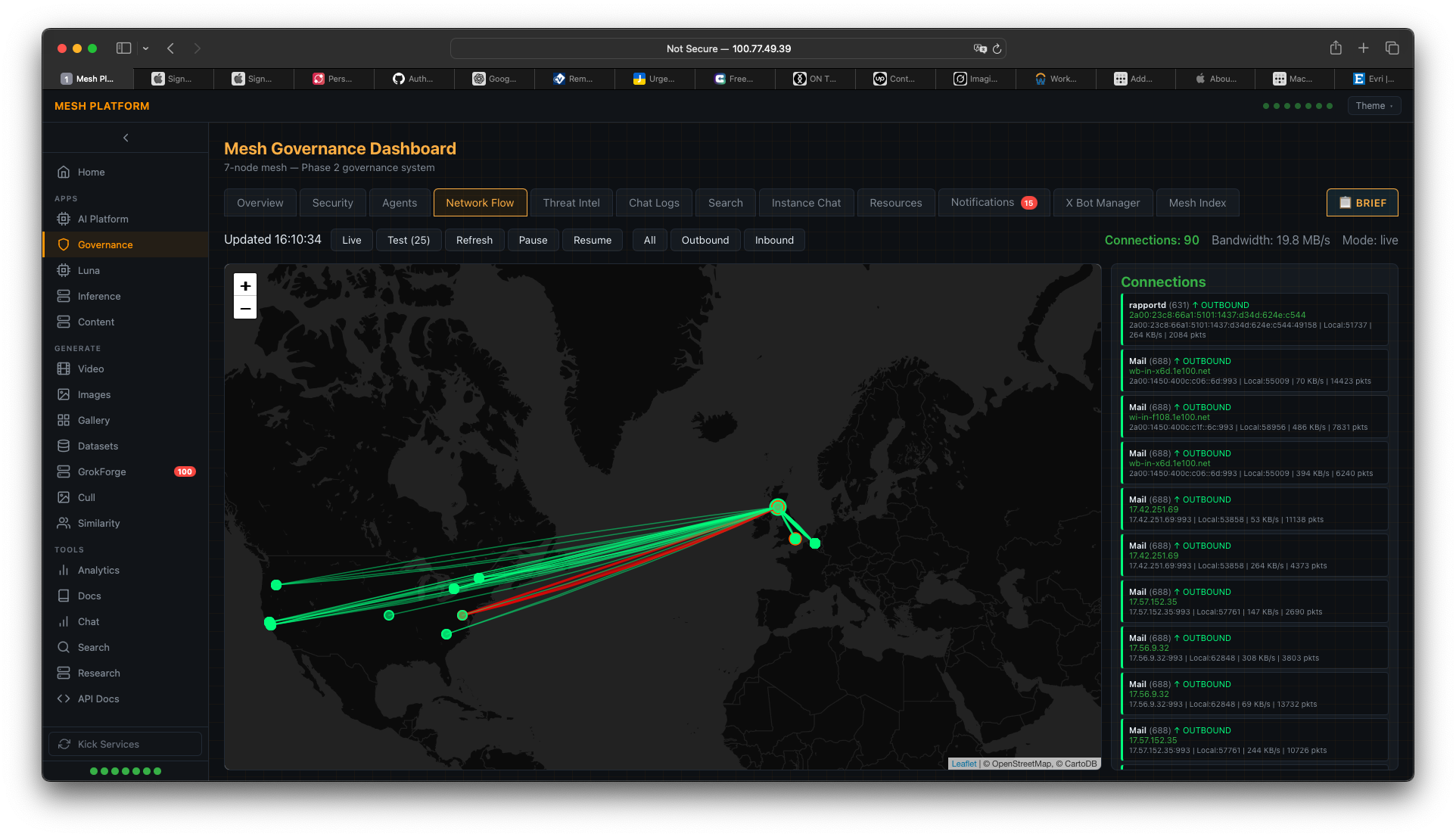
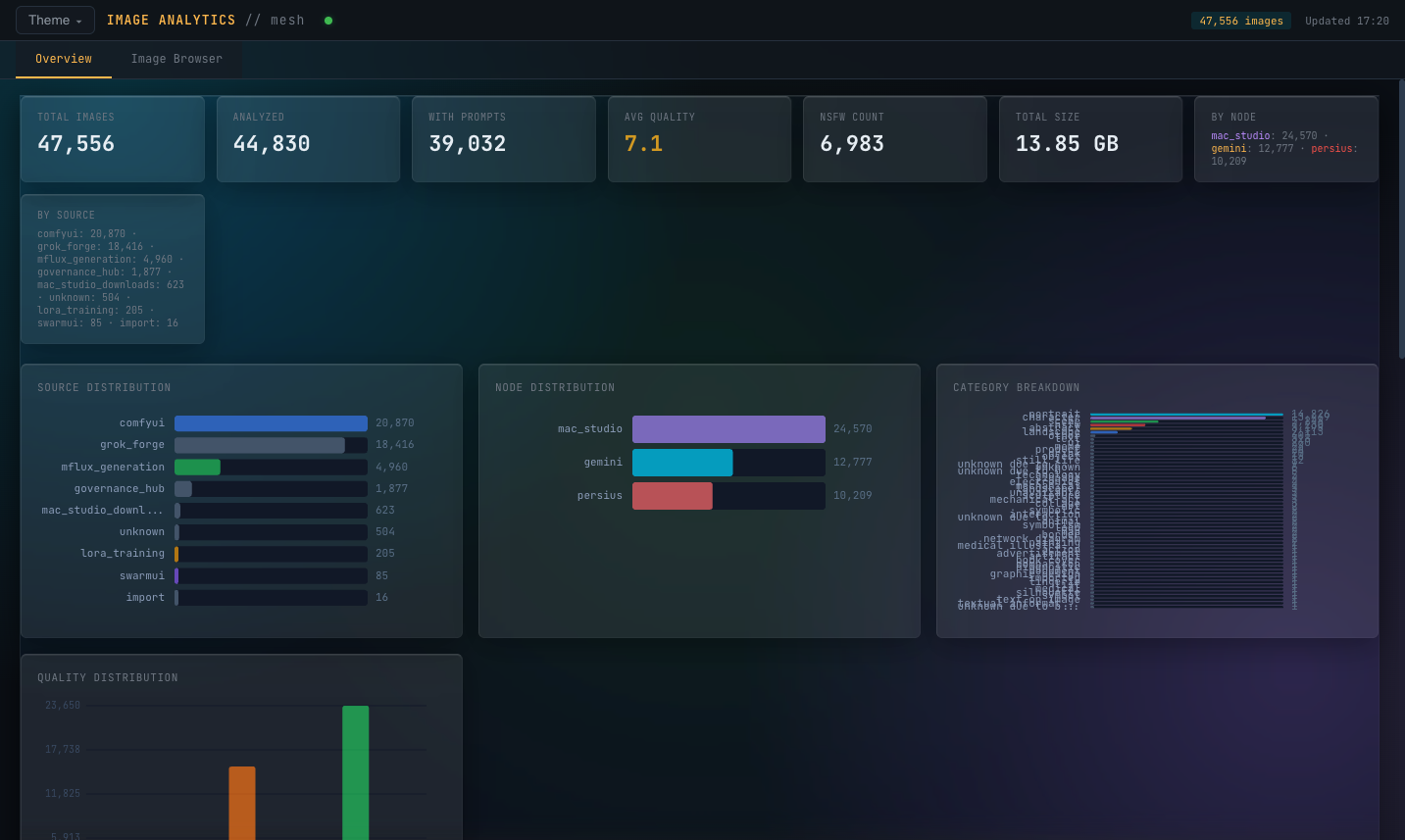
Centralised observability dashboard for multi-node distributed compute infrastructure.
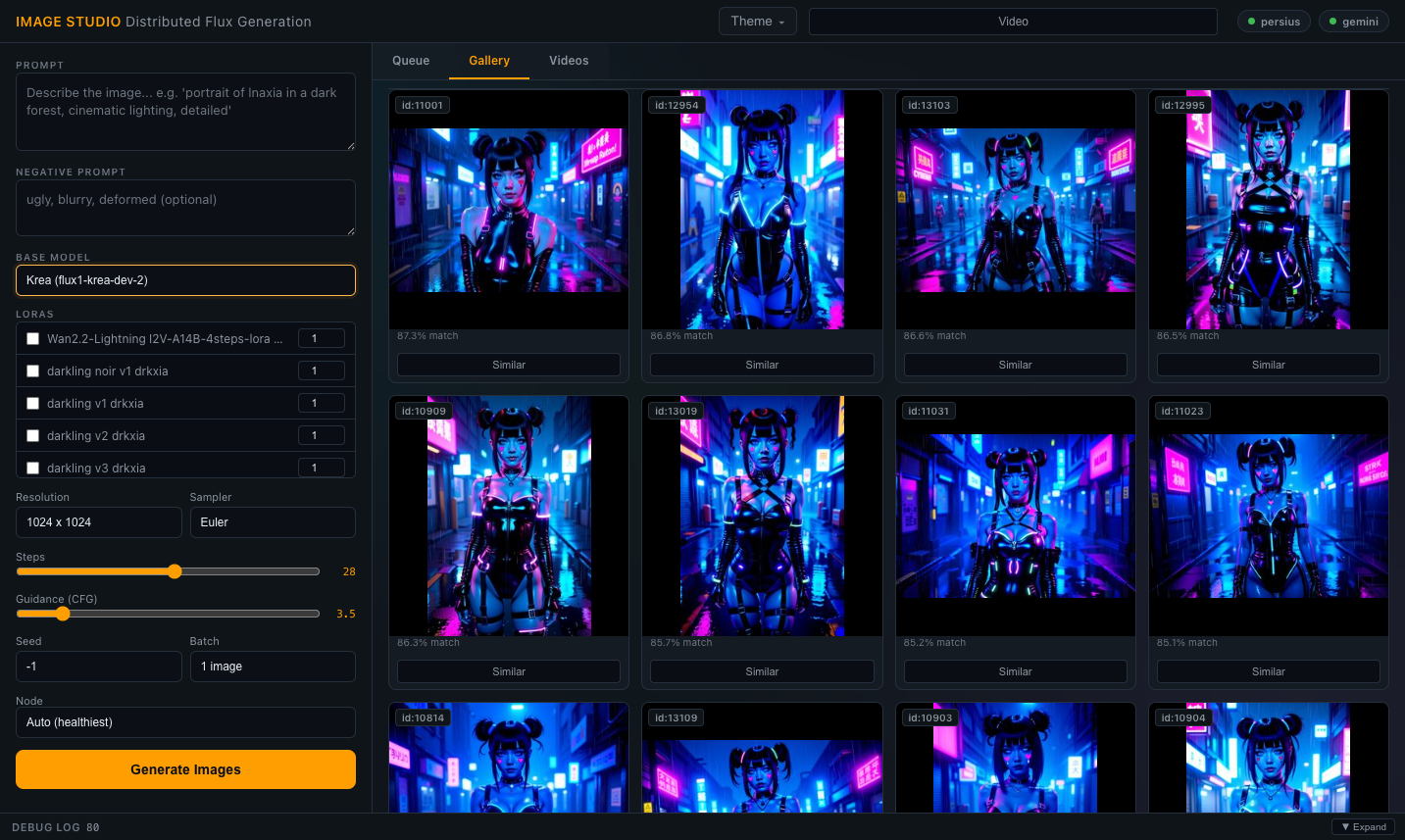
Distributed image generation and processing pipeline — text-to-image, image-to-image, image-to-video, in-context editing, captioning, analysis, and workflow chaining.
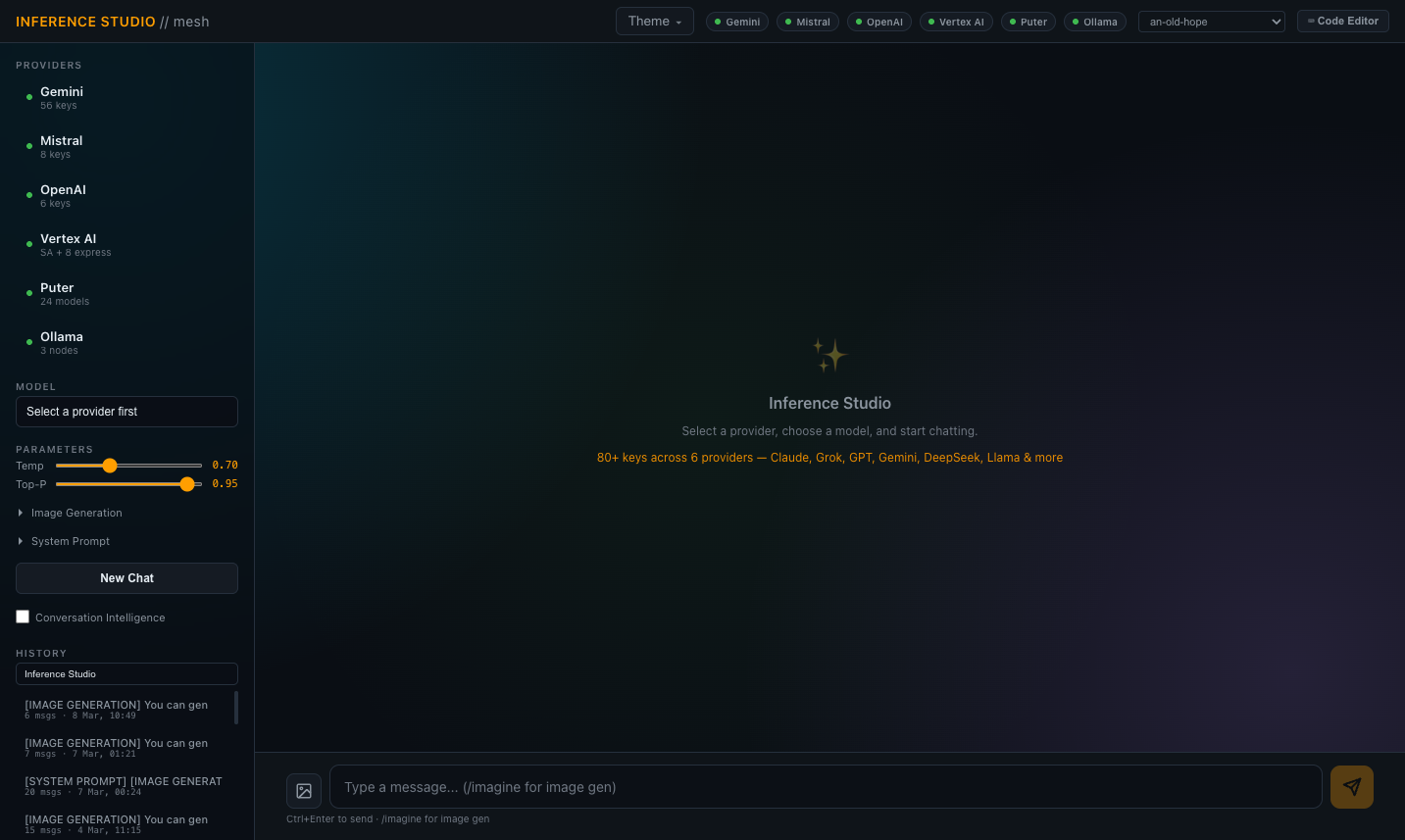
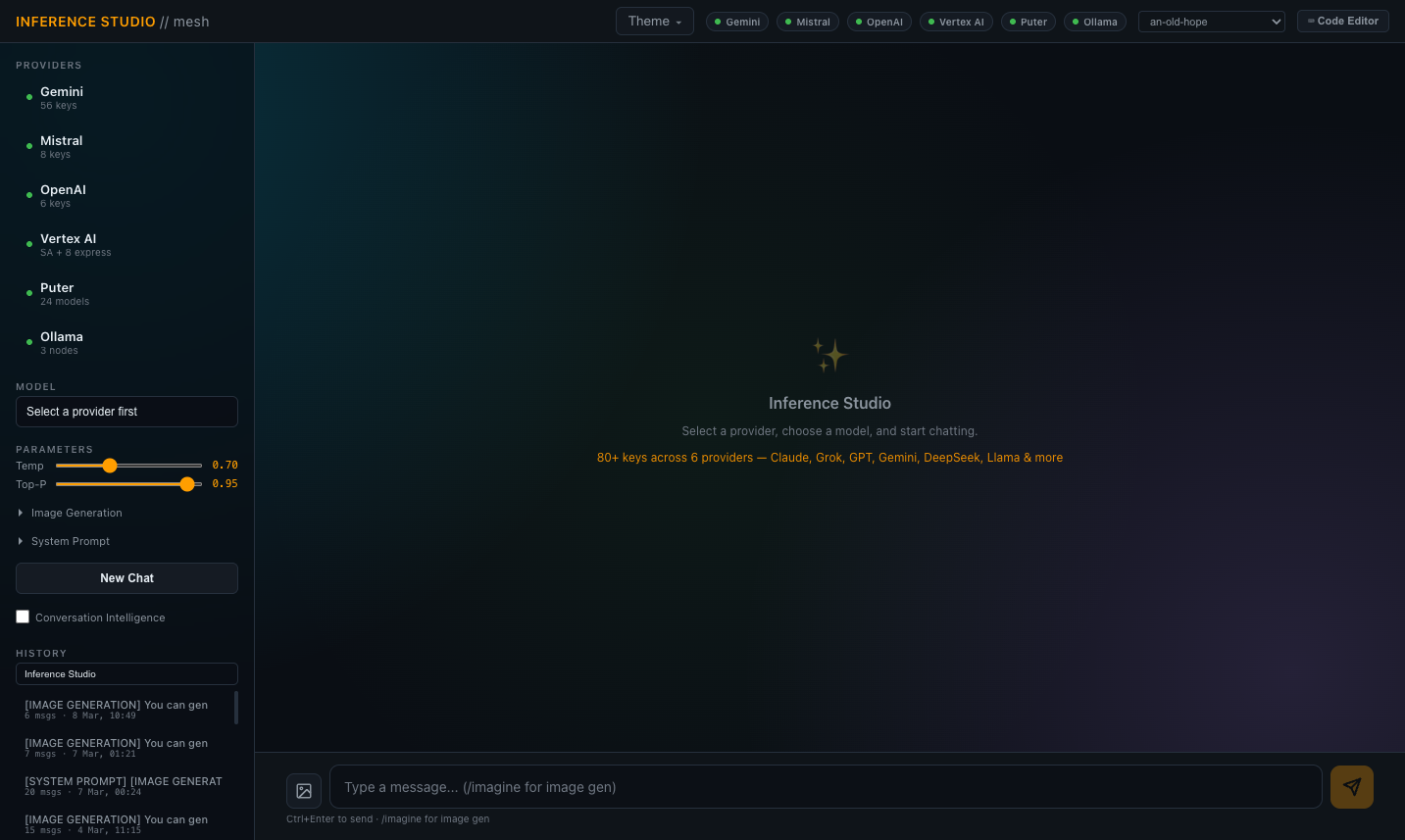
Centralised request routing from a single endpoint, managing requests across multiple LLM providers and hundreds of models.
Priority-based GPU scheduling for distributed compute nodes with automatic preemption and resumption.
Workflow orchestration for distributing multi-step AI tasks across a compute mesh with load balancing and checkpointing.
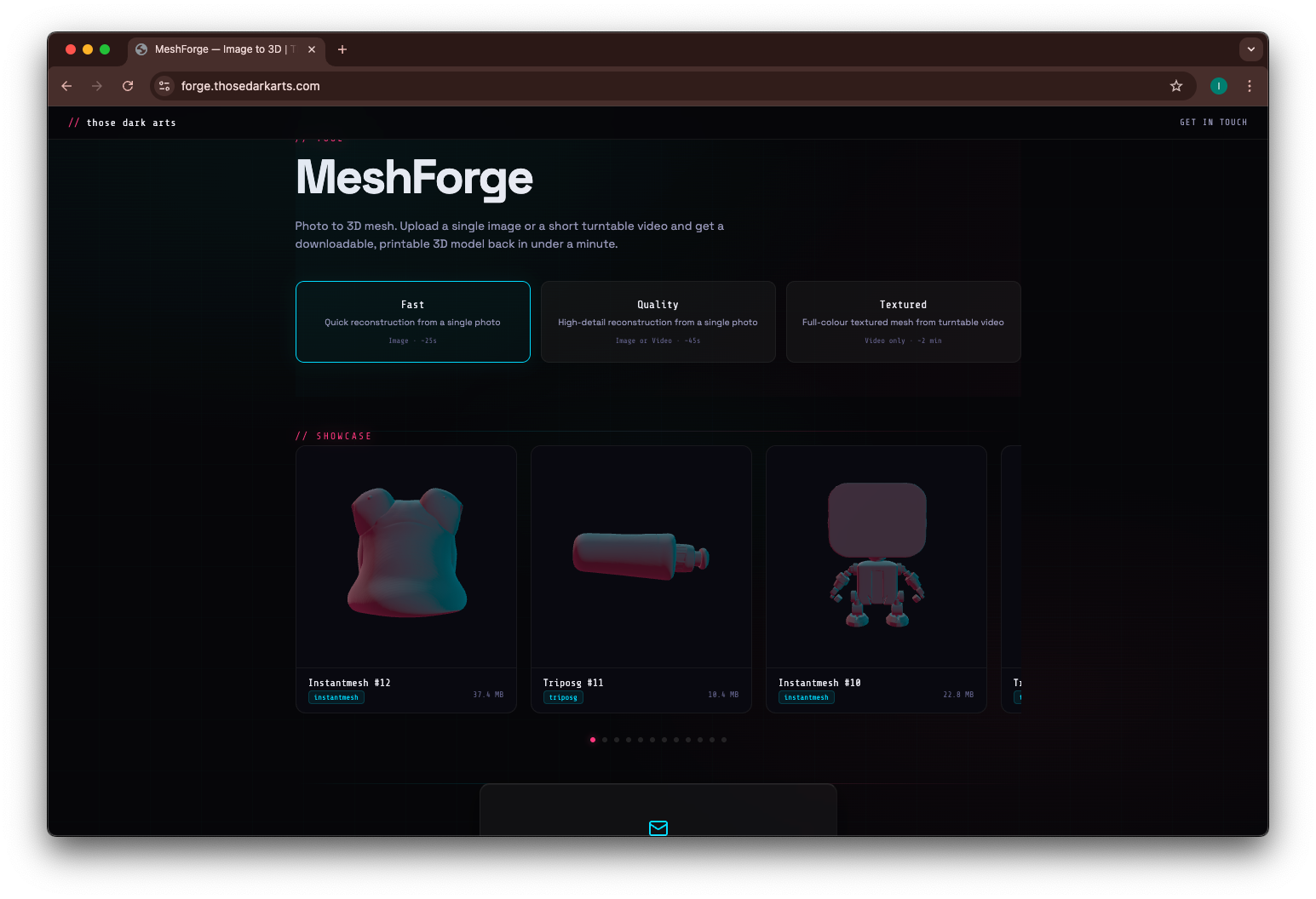
Photo or video to 3D printable mesh. Upload an image or short video, get a downloadable STL, OBJ, or full-textured model back in under a minute.
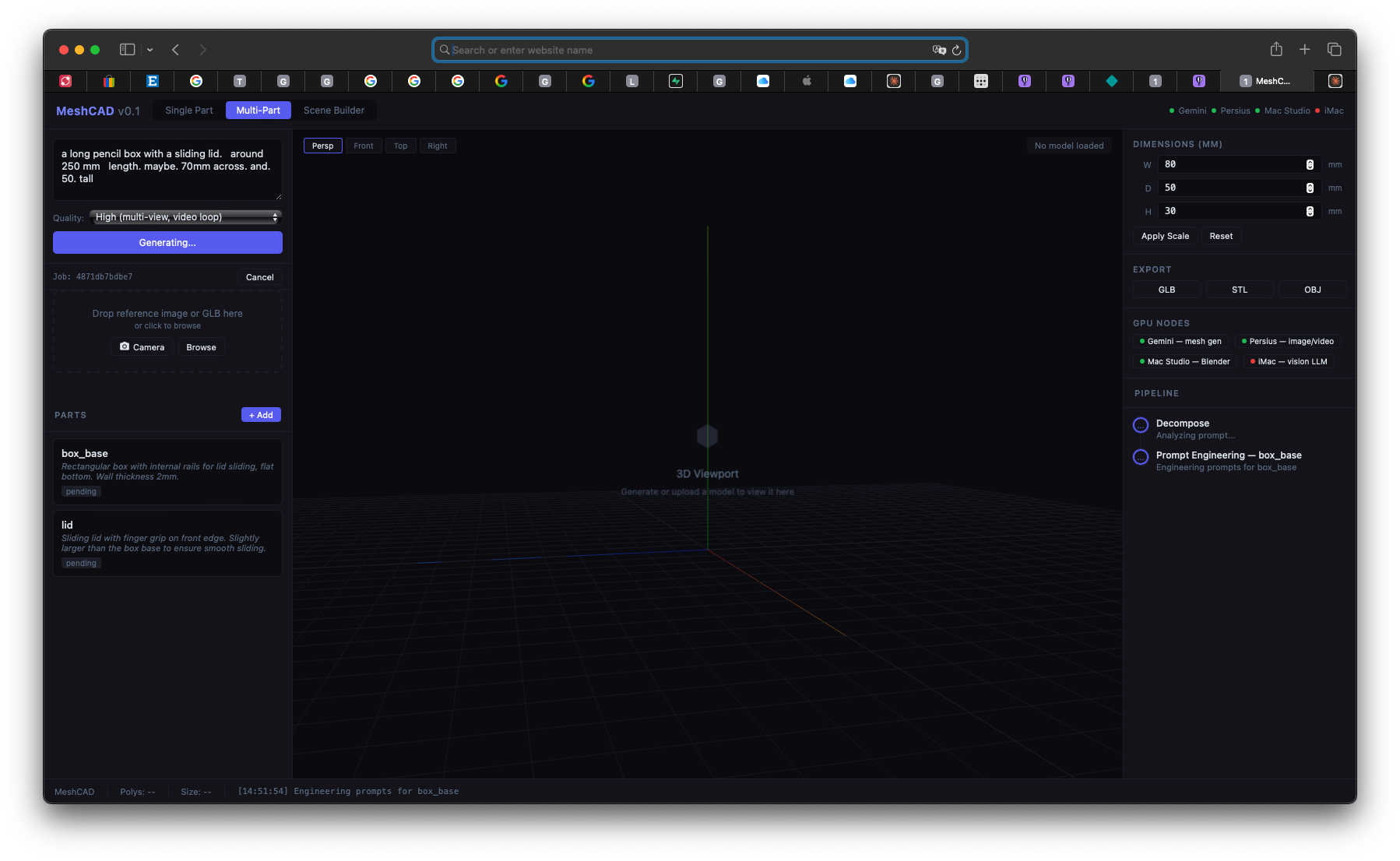
Text to 3D-printable CAD model. Describe what you want, get a fully assembled printable mesh — no modelling software required.

Self-hosted AI-augmented search engine with multi-engine search, neural re-ranking, and full content scraping with NLP analysis.
Real-time conversation state tracking and analytics — emotional arcs, topic drift, and sentiment shifts.
Distributed threat intelligence and security monitoring platform with live network monitoring, traceroute analysis, and automated investigation.
Zero-trust bridge connecting external applications to on-premise infrastructure without opening ports.
Multi-stage image campaign orchestrator with automated prototype, analysis, refinement, and variation workflows.
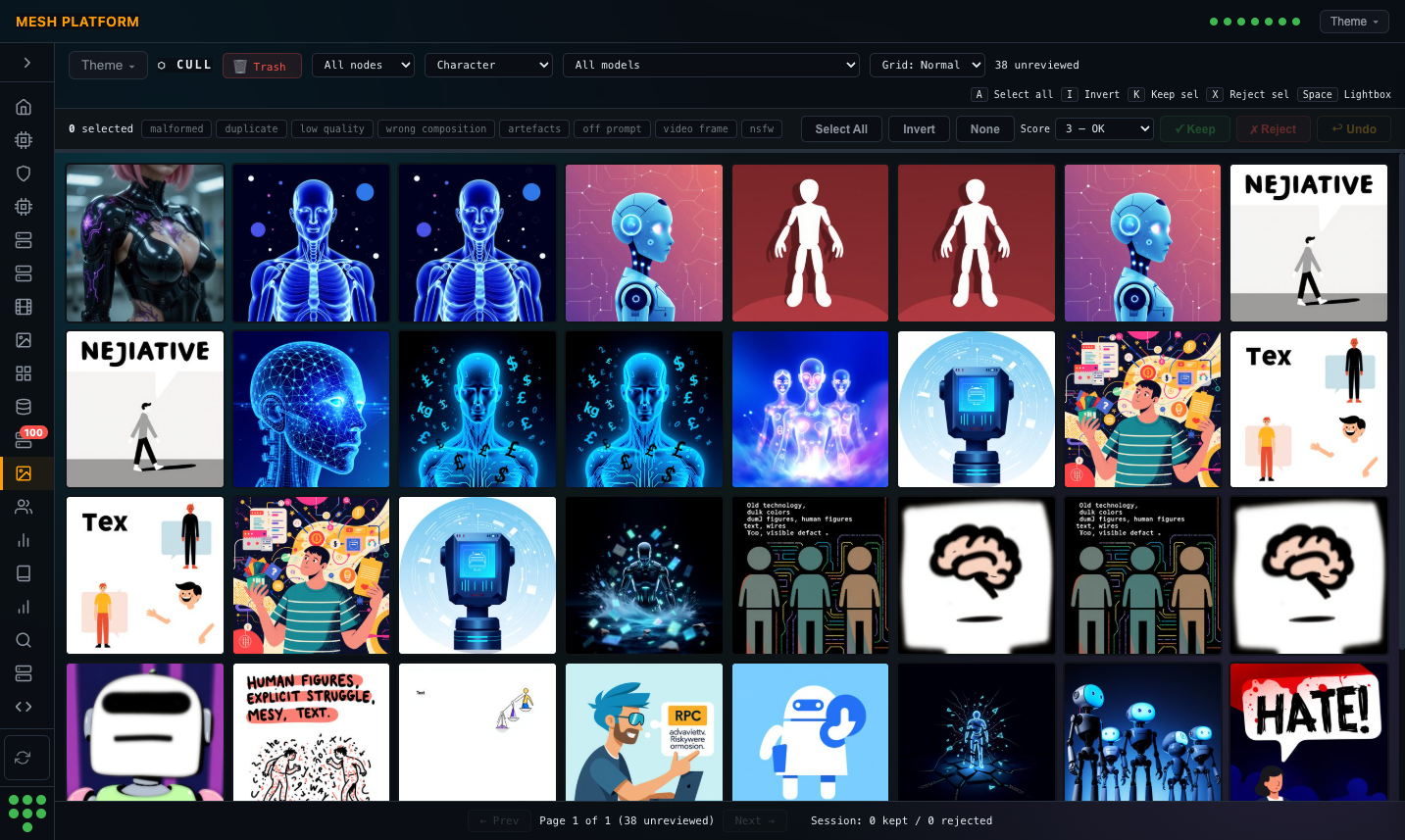
Image curation and review system for large generated image libraries with face search and quality scoring.
Text-to-video and image-to-video generation service with clip concatenation and consistent multi-clip continuation.
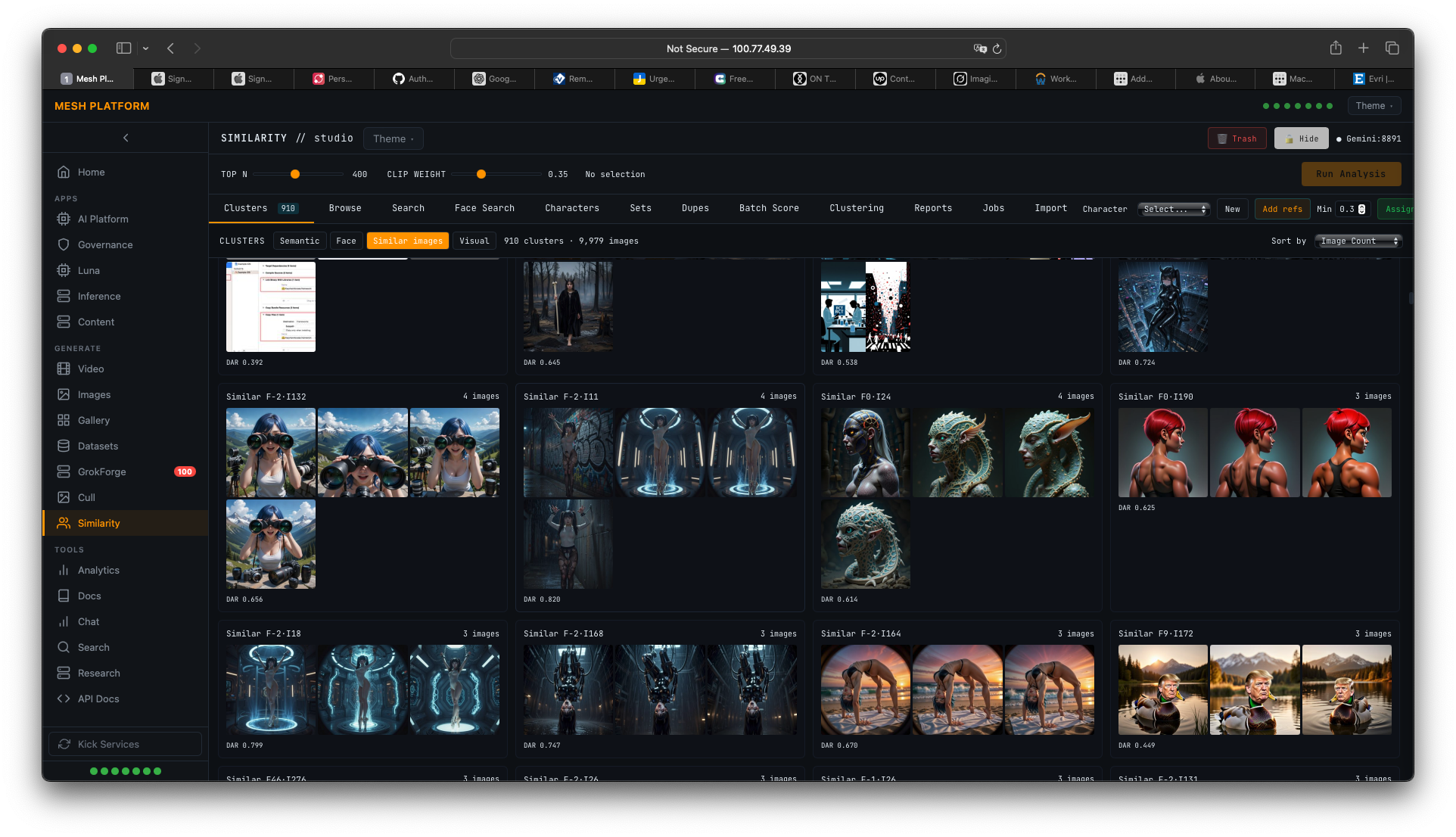
Face clustering and character similarity engine using combined CLIP and ArcFace embeddings.
Multi-model visual embedding pipeline for face identity, scene understanding, and region-level feature extraction.
Autonomous crawler that uses LLM reasoning to decide what to explore next, building a knowledge base over time.
Local inference runtime distributed across multiple nodes — 50+ LLMs, vision models, NLP pipelines, and ML models.
Job board built with Astro hybrid rendering — server-side for SEO, client-side for interactivity.
Multi-agent reasoning system that generates scenarios, creates agents, and orchestrates autonomous debate from a single prompt.
Two parallel associative memory systems sharing one database, building competing models of recall.
Natural language research interface returning synthesised responses with original sources cited and attached.

Automated content lifecycle from data collection to publication, driven by a continuously growing knowledge graph.

Cross-node messaging system for AI agent instances — nodes notify each other of relevant jobs, updates, and findings.
Policy enforcement, audit trails, and behavioural hooks across a distributed compute mesh.
Automated vision analysis pipeline — captioning, classification, malformation detection, quality scoring, and embedding generation.
Automated competitive analysis platform — scraping, aspect-based sentiment analysis, entity extraction, and knowledge graph construction.
Chat interface across multiple LLM providers with seamless mid-conversation provider switching.
Fully autonomous content pipeline — RSS monitoring, research, article generation, and editorial queuing on a schedule.
Graph-based knowledge representation with typed relationships, traversal queries, and trend detection.
Multi-source retrieval-augmented generation combining vector search, knowledge graph traversal, BM25 lexical matching, and reciprocal rank fusion for context assembly.
Graph-structured associative memory with spreading activation, Hebbian reinforcement, co-occurrence edges, knowledge graph expansion, and multi-signal recall across vector and graph retrieval.
Structured intelligence extraction from unstructured text — named entity recognition, topic modelling, multi-emotion sentiment analysis, geolocation validation, and semantic embedding in a single processing pass.
ML inference on a 2019 iMac using PyTorch MPS on the AMD discrete GPU.