Training High-Level Schedulers with Execution-Feedback Reinforcement Learning for Long-Horizon GUI Automation
Beyond the Unified Agent: Deconstructing Long-Horizon GUI Automation with Specialized, Feedback-Driven Scheduling
The relentless march of Large Language Models (LLMs) and Multimodal LLMs (MLLMs) has fueled significant progress in the development of GUI agents – AI systems capable of interacting with graphical user interfaces. However, achieving true autonomy in complex, long-horizon GUI tasks (think automating multi-step financial reports, managing complex software configurations, or assisting with Activities of Daily Living (ADL) for the elderly) remains a formidable challenge. A recent paper, “Training High-Level Schedulers with Execution-Feedback Reinforcement Learning for Long-Horizon GUI Automation” (arXiv:2511.22235v2), proposes a compelling shift in approach: decoupling high-level strategic planning from low-level execution. This isn’t just another incremental improvement; it’s a potential paradigm shift that addresses fundamental limitations of current monolithic agent designs and aligns with emerging trends in AI architecture. This article will dissect the core arguments of the paper, analyze its significance in the broader context of AI development, and explore the implications for future research and applications.
The Bottleneck of the Unified Agent: Why ‘Jack of All Trades’ Fails in GUI Automation
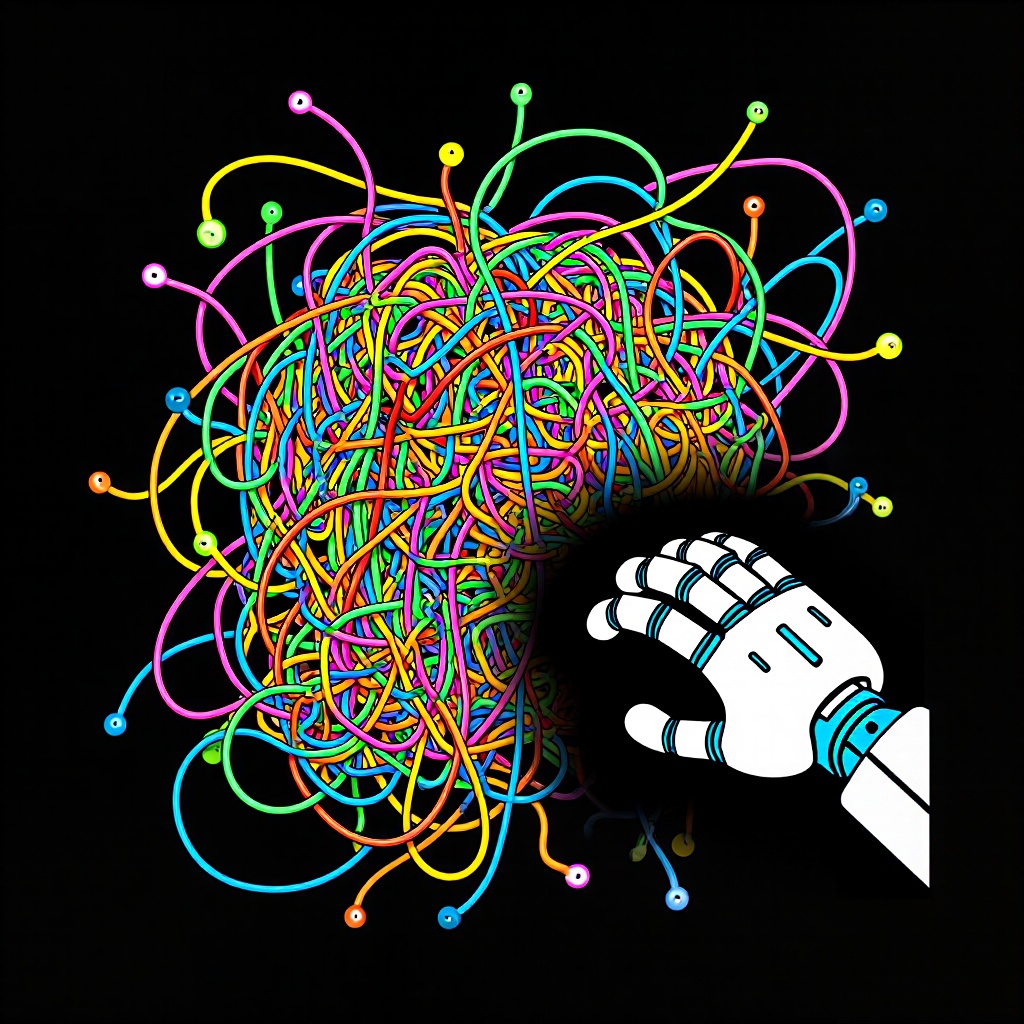
For a long time, the dominant paradigm in GUI agent development has been the “end-to-end” approach – training a single model to handle both the strategic what (what needs to be done) and the tactical how (how to interact with the GUI). While this approach benefits from simplicity, it suffers from critical drawbacks. The paper highlights two key issues: responsibility coupling and capability conflicts.
Responsibility coupling arises because a single model is forced to learn both high-level reasoning and low-level control. This creates a complex optimization landscape, making it difficult for the model to excel at both. Imagine trying to teach a single person to be both a master strategist and a highly skilled surgeon – they’d likely be competent at neither. The model’s parameters become entangled, meaning improvements in one area can inadvertently degrade performance in another.
Capability conflicts occur when the skills required for high-level planning clash with those needed for precise GUI manipulation. A model optimized for generating a coherent plan might struggle with the fine-grained pixel-level control needed to accurately click buttons or fill forms. This is particularly problematic in long-horizon tasks where even small errors accumulate over time, leading to catastrophic failure. Existing techniques like Supervised Fine-Tuning (SFT) and even Direct Preference Optimization (DPO) applied to LLMs like Llama-3.1-8B, while improving performance, haven’t fundamentally solved this issue. They often address symptoms rather than the underlying architectural problem.
This limitation connects directly to the broader debate surrounding AI reliability and safety. A tightly coupled system is inherently less robust and predictable. Understanding why an agent failed becomes exponentially more difficult when all decision-making logic resides within a single, opaque model. This lack of explainability is a major hurdle for deploying GUI agents in critical applications.
The Staged Execution-Feedback Approach: A Division of Labor
The authors of the paper propose a solution inspired by cognitive architectures and distributed AI systems: a staged execution-feedback reinforcement learning algorithm. This approach breaks down the GUI automation task into two distinct phases, handled by two specialized agents:
- The Coordinator: This agent acts as the “brain” of the system. It’s responsible for strategic planning, task decomposition, and generating a sequence of high-level actions. Crucially, it doesn’t directly interact with the GUI. Instead, it produces a plan that outlines the steps needed to achieve the desired goal. This aligns with the concept of Cognition Envelopes – defining the scope of an agent's cognitive abilities and limiting its interaction to a specific domain.
- The State Tracker: This agent is the “eyes and ears” of the system. It focuses on observing the GUI, extracting relevant information, and maintaining a representation of the task’s current state. This is vital for addressing the second challenge identified in the paper: the lack of state awareness in long-horizon tasks. The State Tracker compresses the visual information into a manageable context, allowing the Coordinator to make informed decisions based on the current situation.
The “execution-feedback” aspect comes into play during the interaction between these two agents. The Coordinator proposes a high-level action, the State Tracker executes it (interacting directly with the GUI), and then provides feedback to the Coordinator about the outcome. This feedback loop allows the Coordinator to refine its plan and adapt to unexpected changes in the environment. This is a form of Reinforcement Learning (RL), but cleverly focused on training the scheduler (the Coordinator) rather than the entire policy.
This architecture shares similarities with Neurosymbolic AI approaches, which combine the reasoning capabilities of symbolic systems with the perceptual abilities of neural networks. The Coordinator can be seen as the symbolic component, providing high-level reasoning and planning, while the State Tracker acts as the neural component, handling the low-level perception and control.
Beyond Visual Question Answering: The Importance of State-Aware Reasoning (StaR)
The paper’s emphasis on state tracking is particularly noteworthy. While many GUI agents rely on Visual Question Answering (VQA) to understand the GUI, VQA alone is insufficient for long-horizon tasks. VQA provides a snapshot of the current state, but it doesn’t maintain a history of past actions or anticipate future consequences.
The State Tracker, in contrast, is designed to perform State-aware Reasoning (StaR). It actively maintains a representation of the task’s state, allowing the Coordinator to reason about the effects of its actions and make more informed decisions. This is crucial for tasks that require memory and planning, such as completing a complex form or navigating a multi-step workflow.
The authors utilize techniques for context compression and information management within the State Tracker, which is critical. Raw visual data from a GUI can be extremely high-dimensional, making it difficult to process and store. Effective context compression is essential for maintaining a manageable state representation without losing important information. This is where techniques like Knowledge Graphs (KGs) could potentially play a significant role, providing a structured way to represent the relationships between different GUI elements and the task’s overall goal. The paper doesn’t explicitly mention KGs, but they represent a natural extension to the State Tracker’s capabilities.
Connecting to Broader Trends: Modular AI and the Rise of Specialized Agents
The approach presented in this paper aligns with a growing trend in AI research: the move towards modularity and specialization. Instead of building monolithic models that attempt to do everything, researchers are increasingly exploring architectures that decompose complex tasks into smaller, more manageable sub-problems, each handled by a dedicated agent.
This trend is driven by several factors:
- Scalability: Modular architectures are easier to scale and maintain than monolithic ones. Adding new capabilities or improving existing ones can be done without disrupting the entire system.
- Robustness: A modular system is more resilient to failures. If one agent fails, the others can continue to operate, potentially mitigating the impact of the failure.
- Explainability: Modular architectures are inherently more explainable. It’s easier to understand how the system is making decisions when the decision-making process is broken down into smaller, more transparent steps.
- Resource Efficiency: Specialized agents can be optimized for specific tasks, leading to more efficient use of computational resources.
We’re seeing this trend play out in other areas of AI as well. For example, the development of Retrieval-Augmented Generation (RAG) systems separates the knowledge retrieval component from the language generation component, allowing each to be optimized independently. Similarly, GraphMERT (Graph-based Multi-Expert Reasoning and Training) explores using multiple specialized models to tackle complex reasoning tasks.
The staged execution-feedback approach presented in this paper is a natural extension of these trends, specifically tailored to the challenges of GUI automation.
Forward-Looking Analysis: What Happens Next?
The paper represents a significant step forward in GUI agent development, but there’s still much work to be done. Several promising avenues for future research emerge:
- Dynamic Agent Allocation: Currently, the Coordinator and State Tracker are fixed roles. Future systems could dynamically allocate tasks to different agents based on their expertise and the current state of the task.
- Multi-Agent Collaboration: Extending the architecture to include multiple Coordinators and State Trackers could enable more complex and collaborative tasks.
- Lifelong Learning: Developing agents that can continuously learn and adapt to new GUI environments and tasks is crucial for real-world deployment.
- Integration with External Tools: Combining GUI agents with other AI tools, such as knowledge graphs and databases, could unlock even more powerful capabilities.
- Human-in-the-Loop Interaction: Allowing humans to intervene and guide the agents when necessary can improve reliability and safety.
Perhaps the most exciting prospect is the potential to apply this architecture to a wider range of tasks beyond GUI automation. The principles of decoupling high-level planning from low-level execution, and maintaining a state-aware representation of the environment, are broadly applicable to many areas of AI, including robotics, game playing, and even natural language processing.
Ultimately, the success of this approach will depend on its ability to overcome the limitations of current monolithic agent designs and unlock the full potential of LLMs and MLLMs for long-horizon, real-world applications. The shift towards specialized, feedback-driven scheduling represents a promising step in that direction, moving us closer to truly intelligent and autonomous AI agents. The future isn't about building a single, all-powerful AI; it's about orchestrating a symphony of specialized agents, working together to solve complex problems.